
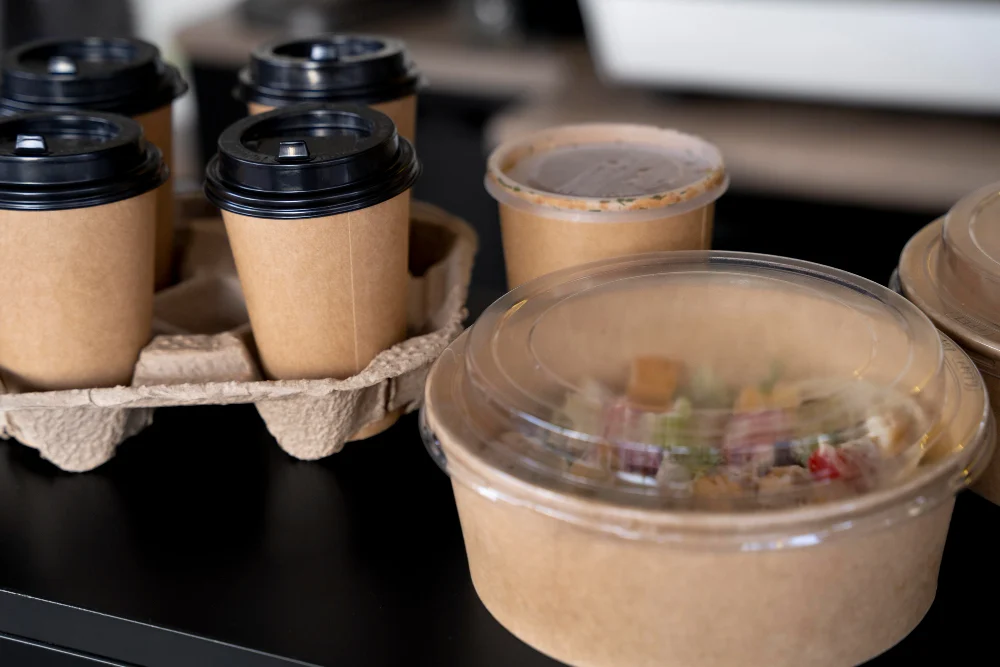
The conversation around sustainability continues to evolve and for many hospitality businesses, understanding what different packaging terms actually mean can feel like a full-time job. One phrase that continues to attract attention is compostable food packaging, but what does it really mean in practice and when is it the right choice for your business?
Let’s break it down.
Compostable Food Packaging & The Reality Of Hospitality
The recent UK heatwave served as a reminder to hospitality businesses of just how busy the summer season can become.
From food festivals and outdoor events to beachside kiosks and bustling town centre cafés, takeaway food and drinks have been everywhere.
In these environments, compostable food packaging is often part of the sustainability conversation. However, the most important consideration isn’t simply whether a product is compostable, it’s whether the disposal route supports it.
That’s a detail many businesses understandably overlook.
Sustainability Is More Than Just A Label
One of the biggest misconceptions surrounding compostable food packaging is that it’s automatically the best solution for every business.
The reality is actually more nuanced than that.
A compostable container used in a venue with dedicated collection systems may be a fantastic option. The same product used somewhere without the correct disposal facilities may not achieve the intended environmental outcome.
That’s why understanding the full journey of packaging is vital.
At Purple Planet Packaging, we encourage businesses to look beyond labels and focus on practical outcomes.
Understanding The Difference Between Compostable & Recyclable
Customers often use the terms interchangeably but they’re very different.
Recyclable products are designed to enter recycling streams where facilities exist.
Compostable food packaging is designed to break down under specific composting conditions.
Neither is automatically better in every situation.
For example, a sports venue with established recycling infrastructure may favour recyclable products, whilst certain catering environments may find compostable alternatives more suitable.
The key is matching the right product to the right environment.
Real Businesses Facing Real Packaging Challenges
Let’s think about a typical summer weekend.
A street food vendor serves hundreds of meals at a local festival. A café sells dozens of iced drinks every hour. An event organiser manages thousands of visitors over a single weekend.
Every one of those businesses has different operational challenges.
That’s why we offer a wide range of solutions including recyclable cups, compostable containers, sustainable cutlery, takeaway boxes and food bowls.
Rather than promoting a one-size-fits-all approach, we help businesses choose products that work for their unique menu, service style and waste management setup.
How EPR Is Influencing Packaging Decisions
The arrival of EPR has encouraged many hospitality operators to take a closer look at their packaging choices.
Increasingly, businesses want to understand where materials come from, how they are disposed of and how those decisions affect both customers and operations.
This is where trusted suppliers can provide real value.
Choosing compostable food packaging may be the right solution in some situations but understanding why it’s right is equally important.
Finding The Right Balance
Sustainability should never feel overwhelming.
Whether you’re serving salads from a food truck, coffees from a city centre café or meals at a large-scale event, the goal remains the same: choose packaging that performs well and supports responsible disposal.
At Purple Planet Packaging, we’re committed to helping hospitality businesses navigate changing regulations, evolving customer expectations and increasingly complex packaging decisions.
After all, when it comes to compostable food packaging, the best choice is always the one that works for your business, your customers and the environment around you.


